

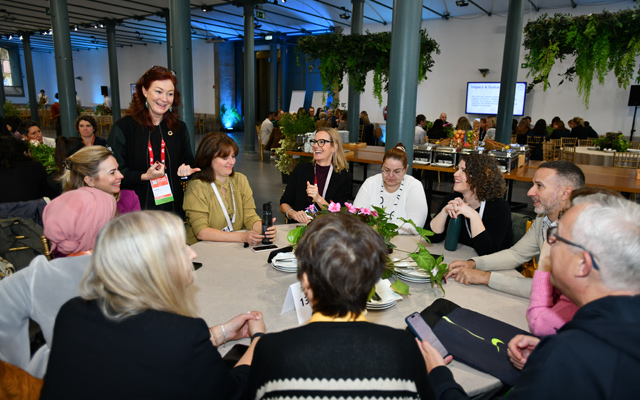
Networking moments at ICCA Congress 2026, set for November 8 to 11 in Panama City, are being turned into strategic opportunities for meeting delegates to connect around shared interests and hold meaningful conversations.
In an unusual move, curators of the annual meeting for the world’s congress professionals have set aside 60 per cent of the programme for networking. This includes business exchange opportunities, cross-sector meetups, peer-to-peer advisory sessions, community hubs, themed networking spaces peer-to-peer exchanges, intentional networking sessions, as well as longer, networking-focused coffee breaks and lunches.
Coffee breaks are no longer simply a pause between sessions, but are instead purposeful moments for delegates to meet, talk and exchange ideas.
Similarly, lunches are structured to encourage interaction. For example, one of the lunch events at ICCA Congress 2026 will be a Latin-inspired experience to reflect the diverse cultures of the South American region.
Explaining ICCA’s strategic view on networking programming, Gemmeke de Jongh, director education at ICCA, told TTGassociations: “People come to the ICCA Congress to learn, to be inspired, and to gain new perspectives. At the same time, they want the opportunity to discuss those ideas with others and explore how they might apply in their own organisations or destinations.”
As such, conference content and networking “work hand in hand”.
“A strong educational session can spark conversations that continue throughout the day, and those conversations often help people gain an even deeper understanding of the topic,” she said.
In taking this intentional networking approach, De Jongh said ICCA’s main consideration is making sure networking complements the content rather than competes with it.
She said: “Why choose between education and networking when you can have both? Through our Edu-Networking approach, learning is woven into every interaction, creating a more dynamic, collaborative, and valuable congress experience.
“Our focus is always on creating opportunities for meaningful engagement. We want delegates to leave with new knowledge, but also with new connections and fresh perspectives that they can take back to their organisations.”
When asked if the growing importance of networking was changing the traditional conference format, de Jongh told TTGassociations that conferences are being encouraged to become more interactive and participant-driven.
“People today have access to information from many different sources. What they increasingly value when they attend an event in person is the opportunity to engage with others, ask questions, exchange experiences, and have conversations that they can’t have online,” observed de Jongh.
However, she does not regard traditional presentations as falling out of favour. Instead, the audience is simply recognising that “some of the best learning happens through interaction”.
“Conferences are evolving to create more opportunities for discussion, collaboration, and peer-to-peer knowledge exchange,” she added.
This change is acknowledged at ICCA and its event programming. The move to make networking opportunities strategic and intentional is “a natural evolution because we’re first and foremost a global community”, reflected de Jongh.
“The Congress is where people come together to share ideas, challenge one another’s thinking, and learn from different perspectives. That’s what makes it such an important gathering for our industry year after year,” she said.


