

The inaugural summit of the Asia Pacific Society of Association Executives (APSAE) will convene in Singapore later this week, welcoming 150 associations from across the region to address a long-standing structural vacuum.
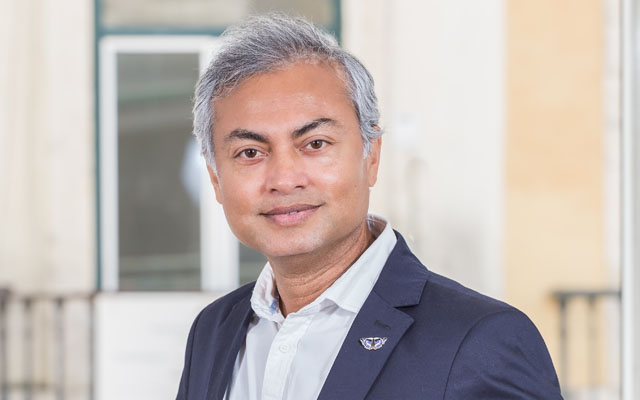
“All along, the Western world was creating the narrative for Asia-Pacific,” explained APSAE’s president Prasant Saha, whose decision to establish the association was driven by a market gap he witnessed across more than three decades in the industry. “But our geopolitics have shifted. Every region is finding we cannot depend so much on the West; we must have our own policies and stand on our own feet.”
Arguing that Western frameworks failed to align with local cultural realities, Saha described how international boards of major Western association groups often lacked a single voice from Asia. “Asia-Pacific is half of the world’s population. Community development is in our core, in our blood. Associations are also sectoral communities, and we need our own narrative based on Asian sensitivity,” he stressed.
A primary catalyst for APSAE’s formation was also the structural imbalance within many regional associations, where major industry players traditionally dominated.
“Most associations in Asia-Pacific are controlled by the ‘big brothers’ of the subject – like textile, rubber, or oil,” Saha said. “They control the narrative, while the SMEs and normal members lose out.” Furthermore, many legacy groups failed to engage the next generation, prioritising outdated policy tracks over the young talent needed to sustain them.
To bridge these gaps, APSAE is launching as a bipartisan platform to foster inter-regional collaboration, allowing groups from all over the region to share practical operational solutions.
“Globally, every association has the same pain points: how to recruit and retain members, how to digitally transform, incorporate AI into the workflow, fundraise, and effectively lobby,” noted Saha.
Rather than adopting American certifications like the Certified Association Executive programme – which forces international executives to study irrelevant US-centric laws like 401(k) plans – APSAE will debut a localised certification track in 2027 built for Asians, by Asians. The society will also unveil an annual State of Associations report to demonstrate the sector’s economic impact to major political and economic bodies like the Asian Development Bank.
In addition, APSAE’s commercial model will be built on low barriers to entry. All three membership tiers – individual, institutional (which grants three floating seats), and student – will operate on two models: a free or low-cost tier ensuring “basic knowledge is given to everyone”, alongside a higher-tier paid category for exclusive, resource-intensive deep dives. The ecosystem is further supported by non-paying academic Knowledge Partners and paid Industry Partners, such as major venues like Marina Bay Sands and local solution providers.
When asked whether he had a specific membership target, Saha drew comparisons to established international bodies. While the US’ American Society of Association Executives boasts around 22,000 members, the European Society of Association Executives maintains a more homogenous footprint of 450 to 500 members. APSAE aims to mirror the European framework.
“Looking at the initial interest, we expect to attract between 500 and 700 members from the APAC region within the next three years,” Saha shared.
To keep association members engaged between annual congresses, APSAE will roll out eight to 10 activities throughout the year, such as dedicated podcasts, online webinars, and joint sectoral research programmes.
Following the upcoming inaugural event, APSAE will formalise an advisory board and a dedicated secretariat to carry the operational mandate forward, transitioning Saha’s temporary leadership into a structured governance model where board members serve two-year elected terms.
Overall, Saha stressed that the focus must remain entirely on the region’s collective growth rather than individual leaders.
“Asia-Pacific associations are important. They must come together to create their own voice and their own narrative, because they only understand what culturally we understand better. Boards will come and go, but the association remains. Only the association can give the industry a voice.”


