

Following the Association for the Advancement of Artificial Intelligence's (AAAI) first overseas conference in Singapore, its executive director Meredith Ellison discusses how the global scientific society is demystifying AI for the public, building a pipeline for young researchers, and why the future of the field relies on human augmentation over displacement
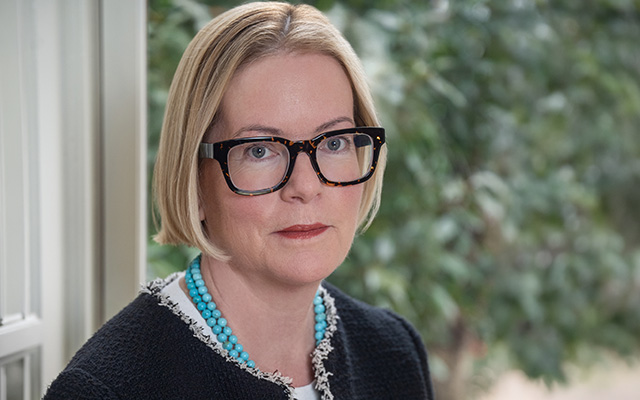
AI has been around for decades, but it is suddenly the only thing anyone is talking about. How has this changed the way you support your members? Are you moving away from being a scientific group to more of a public-facing educator?
The rapid rise of public interest in AI has not expanded the scope of what we do at AAAI since our mission and focus is on AI research.
It did however play a part in why the 2025 Presidential Panel report on the Future of AI Research was written in a non-technical way to reach audiences beyond researchers, including policymakers, funding agencies, the media, and the general public.
We have also launched initiatives like an inter-generational podcast Generations in Dialogue: Bridging Perspectives in AI bringing together AI experts across generations to discuss opportunities, challenges, and ethics in an accessible format.
On the membership side, we are expanding community touchpoints through things like AAAI-sponsored “AIx” pop-up events worldwide, taking the scientific conversation beyond our annual conference.
We have not moved away from our identity as a rigorous scientific society but are adding some more public facing information and events as a part of our overall mission to advance and integrate safe and responsible AI to benefit society.
With so many young people entering the field, how is AAAI making sure it is a home for the next generation? What are you doing to make the association feel welcoming to students, rather than just an elite club for established professors?
AAAI is committed to building a pipeline from the youngest AI enthusiasts all the way through to professional researchers.
Since 1999, AAAI has presented awards at the annual International Science and Engineering Fair to recognise outstanding high school achievement in intelligent computation and robotics, making the association a tangible presence in a student’s life before college.
At the conference level, the Undergraduate Consortium (AAAI-UC) is a dedicated two-day programme featuring speakers, workshops, and events tailored to undergraduates, where accepted students develop and present an original AI research proposal and receive travel funding to attend. The programme also provides mentoring on pursuing graduate studies, practical early career advice, and opportunities to expand professional networks with AI experts and current graduate students.
The Student Scholar Volunteer Program further lowers the barrier to entry by providing substantial travel support for full-time undergraduate and graduate students who submit papers or letters of recommendation from their faculty advisor. Taken together, these programmes that span high school science fairs through graduate study signal that AAAI is the home, not just a destination, for the next generation, investing in students before they have published a single paper.
Everyone is worried about AI being ‘safe’ or ‘fair.’ As an association, how do you help your members navigate those tough ethical choices when they are building new technology?
At AAAI, we do not treat ethics as a checkbox. It is a research discipline, which is why AI ethics and safety, AI for social good, and sustainable AI are central themes in all conferences we convene.
Our 2025 Presidential Panel report directly addresses these challenges, covering topics like AI ethics and safety with the explicit goal of advancing AI in a responsible way, ensuring technological progress is aligned to human values.
And through our dedicated Conference on Artificial Intelligence, Ethics and Society, happening this October in Malmö, we bring together computer scientists, lawyers, ethicists, and social scientists who do interdisciplinary work of not just analysing ethical and societal challenges, but reimagining the institutions, practices, and values needed to govern AI responsibly.
There is a lot of anxiety regarding jobs. As an association of the people actually building these tools, what is AAAI’s message to the global workforce?
AAAI’s 2025 Presidential Panel report, led by outgoing president Francesca Rossi, was deliberately written in a non-technical way to reach policymakers, the media, and the general public, signalling that the AI research community sees public reassurance and shared understanding as part of its responsibility.
The report’s core philosophy is clear; technological progress must support the progress of humanity and be aligned to human values, not a replacement one.
Reinforcing this, the panel emphasised the need to educate people outside the AI research community about the promise of AI for enhancing the quality of human life in numerous ways, and called for deeper investments in methods that enhance interactions and collaborations between people and machine intelligence making augmentation, not displacement, a core tenant of responsible AI research.
I noticed AAAI has a focus on ‘AI for Social Impact’. Could you share an example of a project the association has supported that is solving a major social problem, like climate change or food security?
AAAI’s annual conference features a dedicated Special Track on AI for Social Impact, with focused sub-areas including Agriculture and Food, Climate, Environmental Sustainability, Disaster Mitigation and Response, and Public Health reflecting the breadth of real-world problems the community is tackling.
A concrete example of recognised impact is the 2023 AI to Benefit Humanity Award winner, Tuomas Sandholm, whose AI and optimisation algorithms have been continuously running the national kidney exchange for United Network for Organ Sharing since 2010, with 80 per cent of US transplant centres now part of the exchange, a life-saving application at national scale.
The AAAI 2025 Presidential Panel report further underscores this direction, noting that AI ethics and safety, AI for social good, and sustainable AI have become central themes in all major AI conferences, and that the field increasingly requires AI researchers to collaborate across disciplines including with sociologists, economists, and philosophers to ensure technological progress genuinely benefits humanity.
I understand that this is the first time in its 40-year history that the conference has been held outside the US. Why and how did Singapore become the choice destination to take this event global? What does this move say about the shift in where AI innovation is happening today?
Through a unique set of circumstances, AAAI-26 was held in Singapore. Originally, the conference was planned for Oahu but construction delays at the convention centre necessitated a change of venue with about 18 months planning time.
Singapore emerged as a good location for the 2026 conference, and the Singapore Tourism Board (STB) was incredibly helpful in supporting the conference. The flexibility and assistance STB provided was instrumental in the success of the conference.
Now that the 40th Annual Conference in Singapore has concluded, what do you feel is its lasting legacy for the local AI community? Did it successfully spark the new startups or government partnerships you were hoping for?
Now that the conference is concluded, just the fact that it was the first annual AAAI held outside North America will be a huge part of its lasting legacy.
I think it is too soon to tell what else will come from it. It was a huge success in bringing together the AI community and connecting researchers with companies and government, and we look forward to AAAI-27 in Montreal.


